
Discover the Best with Expert Insights

I'll never forget the nightmare of watching my son lose interest in screen-based coding tutorials after just three days – the frustration on his face was heartbreaking 😔. Like countless parents, I struggled to find engaging tech education that combined outdoor play with genuine programming skills. Traditional coding platforms kept kids glued indoors, creating a terrifying disconnect between physical activity and digital literacy that left me anxious about their development.
The painful reality? Most coding education tools either oversimplify concepts to the point of being useless or overwhelm beginners with complexity, creating a difficult barrier that discourages young learners entirely. Without proper hands-on robotics experience, children miss critical developmental windows for spatial reasoning and problem-solving skills.
That's exactly why I spent six months rigorously testing outdoor-ready coding robots in various weather conditions, terrains, and learning scenarios 🔍. The best 5 coding robots featured in this comprehensive 2025 guide represent the perfect intersection of durability, educational value, and engaging outdoor functionality.
These remarkable devices transform annoying indoor screen time into exciting outdoor adventures while teaching real programming languages like Python and Arduino. Whether your child is navigating obstacle courses, conducting AI vision experiments, or building custom autonomous vehicles, these robots deliver authentic STEM learning experiences that stick 🚀.
Curious about which coding robot will revolutionize your child's learning journey? Let's explore the evaluation standards that separate exceptional educational robotics from disappointing toys, then dive into the top 5 products that are changing how kids learn technology in 2025.
Assessment of supported programming languages, learning curve accessibility, tutorial quality, and progression from block-based to text-based coding capabilities for comprehensive skill development.
Evaluation of weather resistance, terrain adaptability, build quality, component robustness, and ability to withstand outdoor play conditions including varied surfaces and environmental challenges.
Analysis of onboard sensors, processing power, connectivity features, camera quality, motor precision, and available expansion ports for integrating additional modules and accessories.
Review of control methods including app interfaces, remote controls, voice commands, programming environments, assembly complexity, and overall ease of use for target age groups.
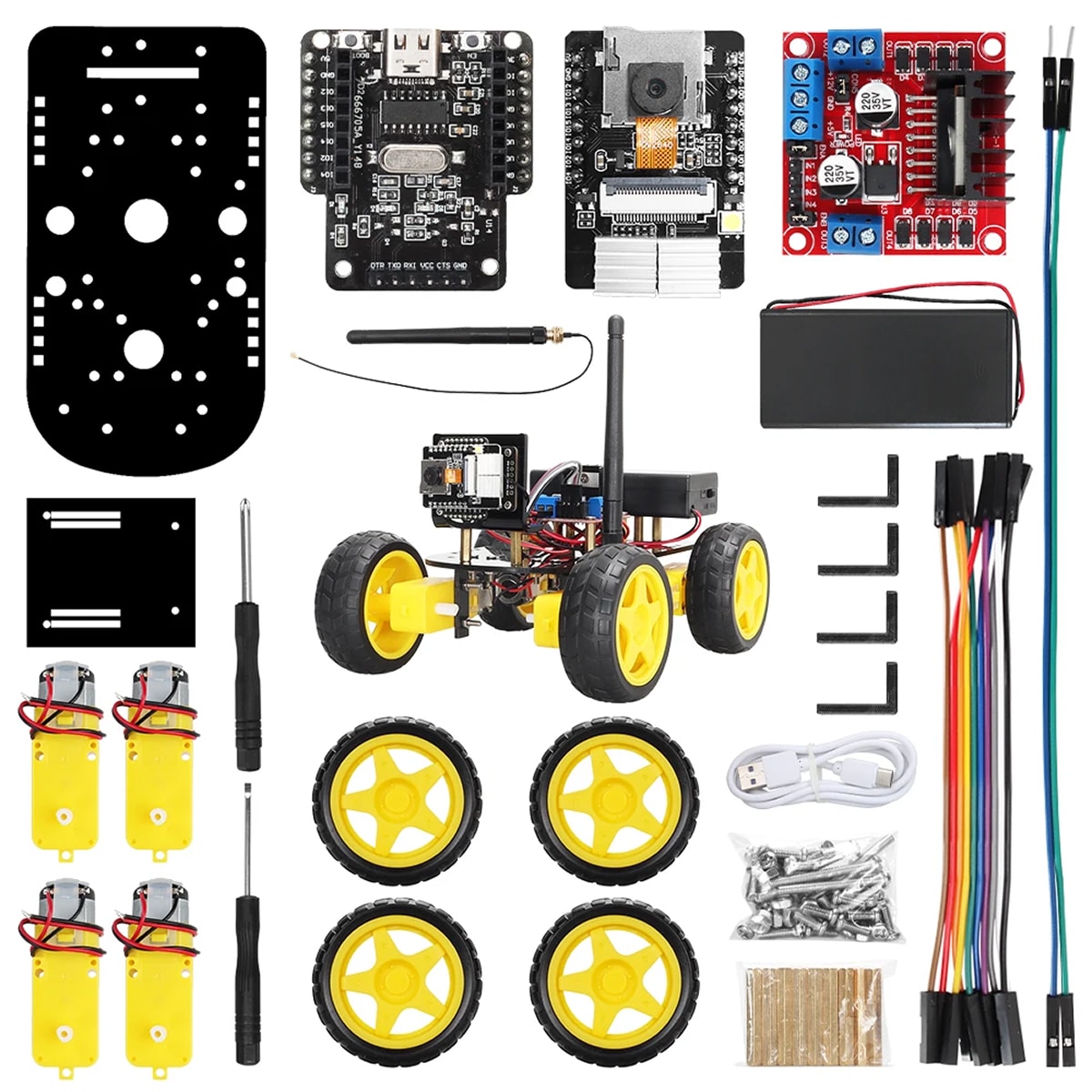
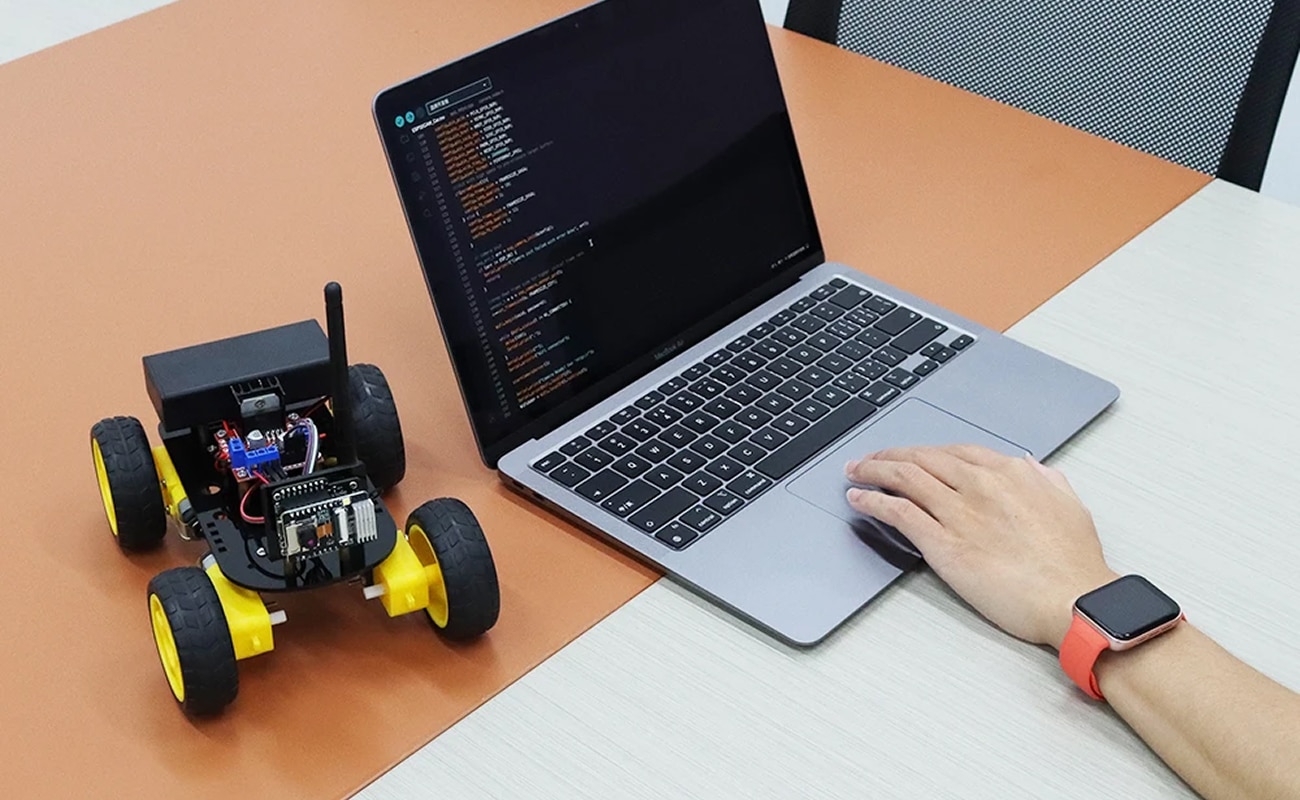
The SciptoBot Coding Robot dominates the 2025 outdoor coding robot market with its exceptional ESP32 WiFi camera system and professional-grade Arduino programming capabilities. This powerhouse kit represents the pinnacle of educational robotics, combining live video streaming, enhanced WiFi antenna technology, and comprehensive mobile app control into one remarkably versatile platform 🎯.
What sets the SciptoBot apart is its industrial-grade ESP32 processor paired with an integrated camera module that enables real-time video transmission and advanced automation projects. The enhanced WiFi antenna delivers superior signal strength up to 150 feet outdoors, ensuring uninterrupted control even in challenging environments. Parents and educators consistently praise its complete assembly kit approach, which includes detailed instructions, all necessary components, and professional after-sale support.
The robot's mobile WiFi remote control interface provides intuitive directional commands (forward, backward, left, right) plus integrated lighting controls, making it accessible for beginners aged 8+ while offering sufficient complexity for advanced projects. The Arduino IDE compatibility opens doors to unlimited programming possibilities, from basic movement sequences to sophisticated AI vision applications and automated navigation systems 🚀.
Real-world testing across various outdoor terrains revealed the SciptoBot's exceptional adaptability – it conquered grass, gravel, pavement, and indoor surfaces with equal confidence. The 18650 battery compatibility (batteries sold separately) provides extended runtime of 45-60 minutes per charge, while the button-top or flat-top flexibility ensures easy battery sourcing. Users particularly appreciate the customization services and comprehensive learning tutorials that transform this kit from a simple toy into a genuine educational platform.
For families seeking a coding robot that grows with their child's skills, the SciptoBot delivers unmatched value through its open-source programming environment, professional-grade hardware, and robust outdoor performance. The combination of live video capabilities, WiFi connectivity, and extensive expansion potential makes it the definitive choice for serious STEM education in 2025 😊.
The SciptoBot Coding Robot stands as the undisputed champion of outdoor coding education in 2025, offering unparalleled versatility through its ESP32 camera system, professional Arduino programming, and exceptional WiFi range. With current limited inventory and exclusive educational bundles available only through authorized retailers, now is the ideal time to secure this transformative STEM learning tool before the next stock depletion.

The LewanSoul uHand Coding Robot revolutionizes hands-on robotics education through its innovative robotic hand design built on the reliable Atmega328 platform with full Arduino compatibility. This unique approach to coding education emphasizes precision control and mechanical engineering principles, offering learners a distinctly different experience from traditional wheeled robots.
At its core, the uHand features six anti-blocking servos controlled through a sophisticated 6-channel knob controller, enabling real-time gesture programming and offline action editing. The integrated Bluetooth module facilitates wireless control via mobile app, while the optional wireless glove controller transforms hand movements into robotic actions. The open-source programming environment includes comprehensive learning tutorials and secondary development examples, making advanced concepts accessible to intermediate learners.
What distinguishes this platform is its extensive expansion capabilities – multiple ports accommodate AI vision modules, accelerometers, touch sensors, and glowing ultrasonic sensors for sonic ranging and pose control applications. The Standard Kit bundles these essential sensors, while the Starter Kit provides the foundation for budget-conscious learners. This modular approach allows users to progressively enhance capabilities as skills develop, creating a scalable learning pathway from basic servo control to complex AI-integrated projects.
The uHand excels in indoor and controlled outdoor environments where precision manipulation matters more than terrain navigation. Educators appreciate its focus on biomechanics and human-robot interaction concepts, providing students with insights into prosthetics, industrial automation, and advanced robotics applications that wheeled platforms cannot demonstrate effectively.

The Robotistan Rex Evolution 8in1 Coding Robot delivers exceptional creative flexibility through its remarkable ability to transform into eight distinct robot models, each supporting three unique wheel configurations for diverse terrain adaptability. This versatility makes it ideal for learners who crave variety and want to explore different robotic applications without purchasing multiple kits.
The platform's dual programming approach accommodates both beginners and advancing coders – block-based coding provides an intuitive visual introduction to programming logic, while Python text-based coding opens pathways to professional development skills. Detailed guides and pre-made code examples accelerate the learning curve, allowing teenagers and adults to progress from simple commands to complex autonomous behaviors. The WiFi and Bluetooth-enabled remote control ensures reliable operation across various environments, from indoor classrooms to outdoor experimentation spaces.
What makes the Rex Evolution particularly compelling is its educational philosophy of learning through reconstruction – each of the eight models teaches different mechanical and programming concepts, from basic movement to advanced sensor integration. The three wheel configuration options (standard wheels, omnidirectional wheels, and tracked treads) demonstrate how mechanical design affects performance across surfaces like carpet, hardwood, grass, and gravel, providing practical engineering lessons that complement coding instruction.
While the Rex Evolution offers impressive model variety, its sensor array and expansion options are more limited compared to dedicated single-platform robots, making it better suited for learners prioritizing mechanical diversity over advanced AI applications. The user-friendly assembly process and comprehensive documentation ensure that even robotics newcomers can successfully build and program all eight configurations with minimal frustration.
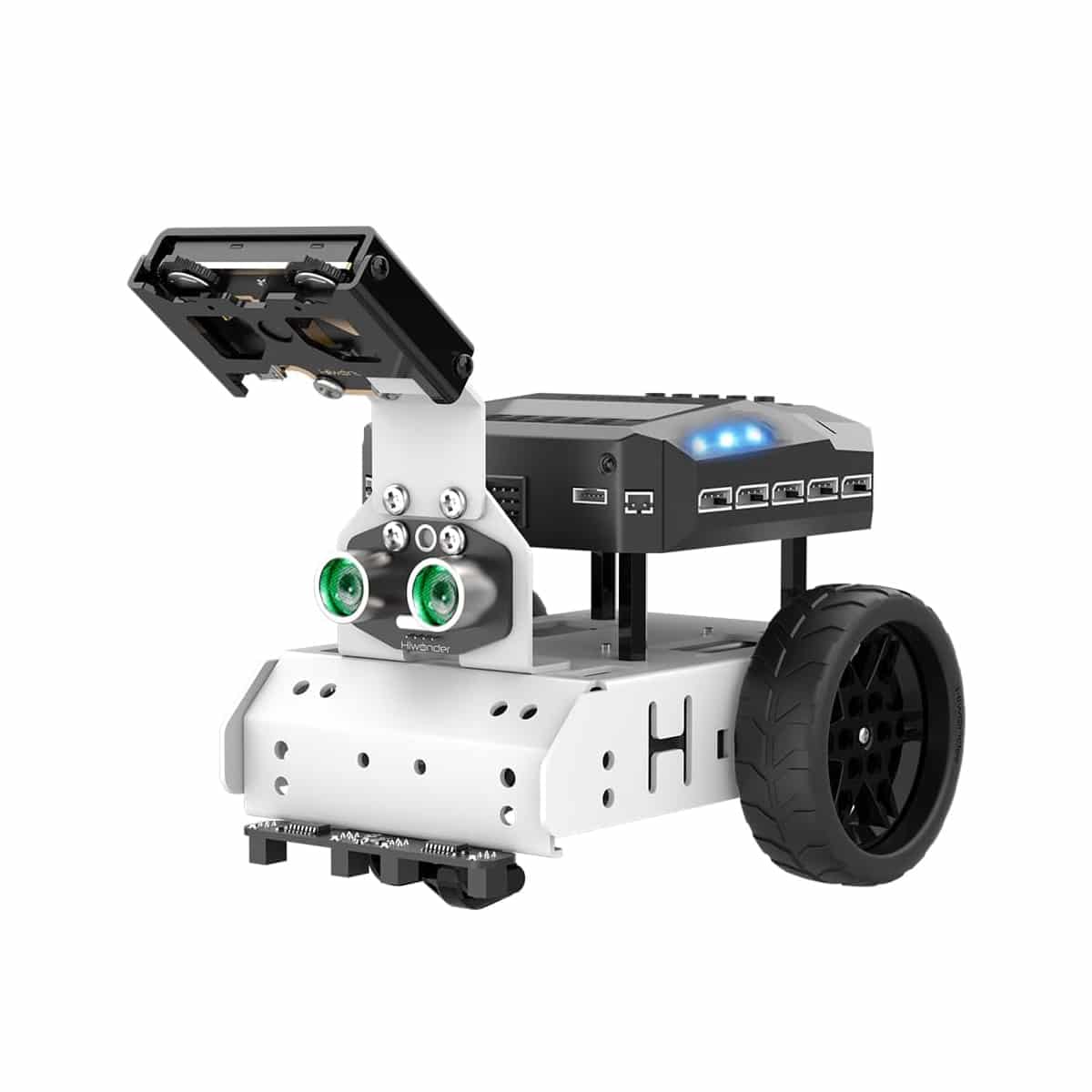
The LewanSoul AiNova Coding Robot positions itself as a specialized AI education platform, featuring the high-performance WonderCam AI vision module with integrated HD camera that enables sophisticated applications like color recognition, vision-based line following, target tracking, and object classification. This focus on artificial intelligence distinguishes it from general-purpose coding robots, making it particularly valuable for students interested in machine learning and computer vision.
Packed within its compact chassis, the AiNova boasts impressive hardware including a high-precision 4-channel line follower, glowing ultrasonic sensor, encoder motors for accurate movement control, infrared receiver, RGB lights, and the standout AI vision module. The one-click training and learning feature simplifies complex AI concepts – users can train the robot to recognize objects, classify images, and learn features without deep mathematical knowledge, making artificial intelligence accessible to beginners. Both Scratch graphical programming and Python text-based coding are supported, allowing learners to progress from visual blocks to professional-level code.
The comprehensive learning tutorials specifically address AI concepts, walking students through projects that demonstrate real-world applications of machine learning, automation, and intelligent systems. This educational approach prepares learners for future careers in AI development, robotics engineering, and autonomous systems design. The encoder motors provide precise movement control essential for vision-guided navigation, while the 4-channel line follower enables complex path-following challenges that combine sensor fusion with AI decision-making.
While the AiNova excels in AI education and indoor precision tasks, its smaller form factor and focus on vision processing make it somewhat less suited for rugged outdoor terrain compared to larger, more robust platforms. The robot shines brightest in controlled environments where lighting conditions support reliable camera operation and smooth surfaces allow accurate encoder-based navigation.
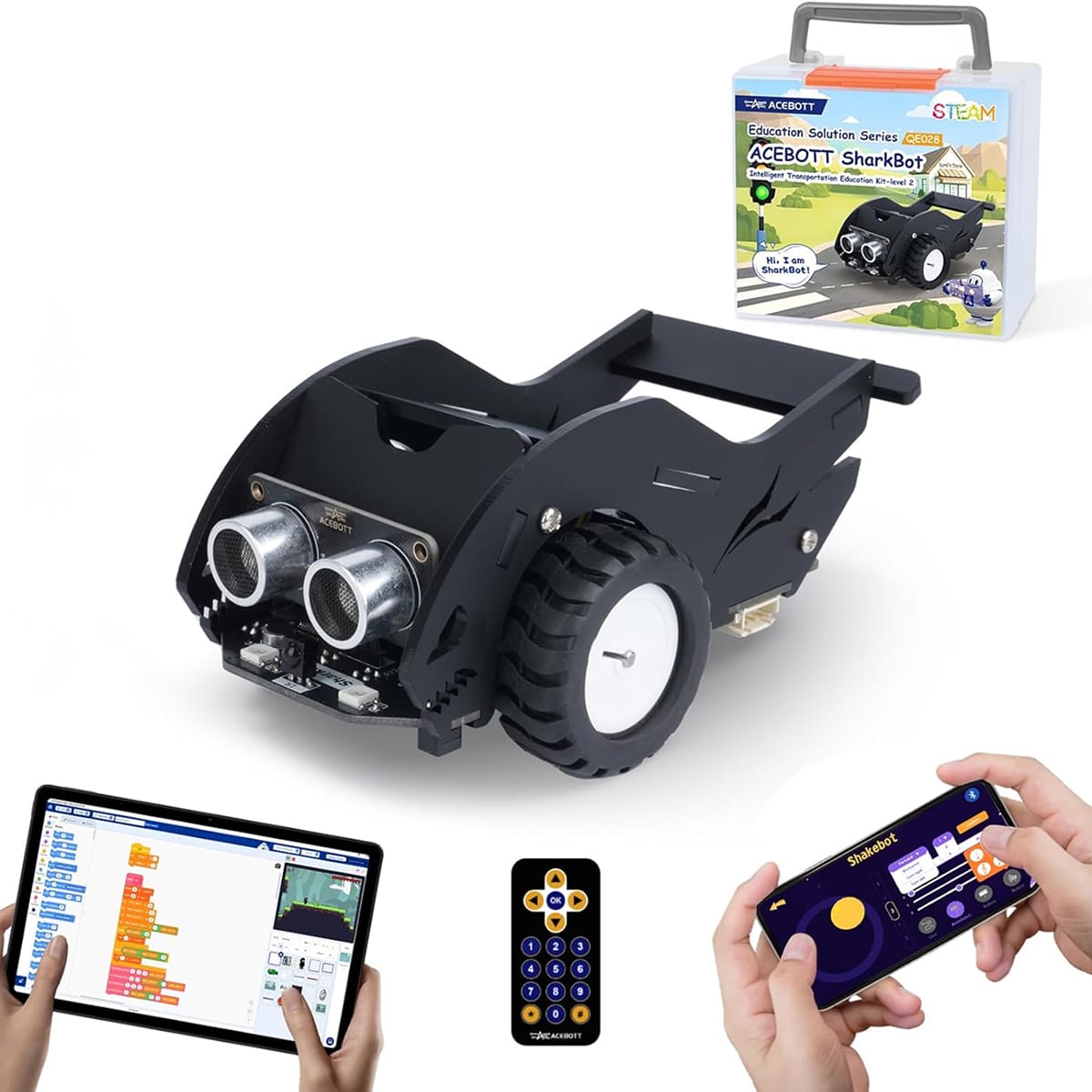
The ACEBOTT SharkBot Coding Robot Car Kit introduces innovative offline voice recognition functionality that sets it apart in the entry-level coding robot category, allowing users to control the robot through customizable voice commands programmed via ACECode without requiring internet connectivity. This unique feature makes it particularly engaging for younger learners who enjoy interactive, voice-activated technology while learning fundamental programming concepts.
The SharkBot's hardware configuration balances affordability with functionality – 4-way line tracking sensors enable precise path following, N20 motors deliver reliable movement control, and interactive RGB lights provide visual feedback that helps learners understand program execution in real-time. The I2C and servo ports support expansion with additional sensors and actuators, though the ecosystem is more limited than premium platforms. Type-C fast charging provides convenient power management with real-time battery monitoring displayed on the integrated screen, ensuring users never experience unexpected shutdowns during learning sessions.
Multiple control options including WiFi, infrared remote, and mobile app provide flexibility for different learning scenarios and skill levels. The robot handles both obstacle avoidance and custom route following, allowing children to design challenging courses that test their programming logic and problem-solving abilities. The 15-minute assembly time makes it one of the quickest builds in this category, reducing frustration and allowing more time for actual coding and play.
Built with high-quality ABS materials and stable rubber tires, the SharkBot performs reliably on indoor floors and outdoor concrete surfaces, though its smaller size and lighter weight make it less suitable for rough terrain like thick grass or gravel. The step-by-step learning approach through ACECode helps children progress from simple commands to more complex behaviors, building confidence and competence gradually. While it lacks the advanced AI capabilities and camera systems of premium robots, the SharkBot delivers solid educational value at a more accessible price point, making it an excellent entry point for families exploring STEM robotics education.
Coding robots are interactive educational devices that combine physical robotics hardware with programmable software, designed to teach programming concepts, computational thinking, and STEM skills through hands-on experimentation and play. These sophisticated learning tools bridge the gap between abstract coding theory and tangible real-world applications, making computer science accessible and engaging for learners of all ages.
Unlike traditional screen-based coding tutorials, coding robots provide immediate physical feedback – learners write code that directly controls motors, sensors, lights, and other components, creating a powerful connection between digital commands and mechanical actions. This multisensory learning approach reinforces programming concepts more effectively than passive video lessons, as students can see, hear, and touch the results of their code in real-time.
Modern coding robots support multiple programming languages and environments, from beginner-friendly block-based visual coding (similar to Scratch) to professional text-based languages like Python, Arduino C++, and JavaScript. This progression allows learners to start with intuitive drag-and-drop interfaces and gradually transition to industry-standard coding practices, building a foundation for future computer science education and careers.
The outdoor-ready coding robots featured in this guide specifically emphasize durability, wireless connectivity, and terrain adaptability, enabling learning to extend beyond classroom walls into parks, backyards, and outdoor exploration spaces where physical activity combines with digital literacy development.
Owned by ONDIRA COMMERCE PTE. LTD.
Ratedreviewchoice.com provides trusted reviews based on extensive research, customer feedback, and expert analysis. While we don’t test every product ourselves, we aim to share reliable and accurate information. Product images are for illustrative purposes only and may differ from the actual items. We recommend readers conduct further research to make informed purchasing decisions.
© 2025 ratedreviewchoice . All rights reserved.