
Discover the Best with Expert Insights

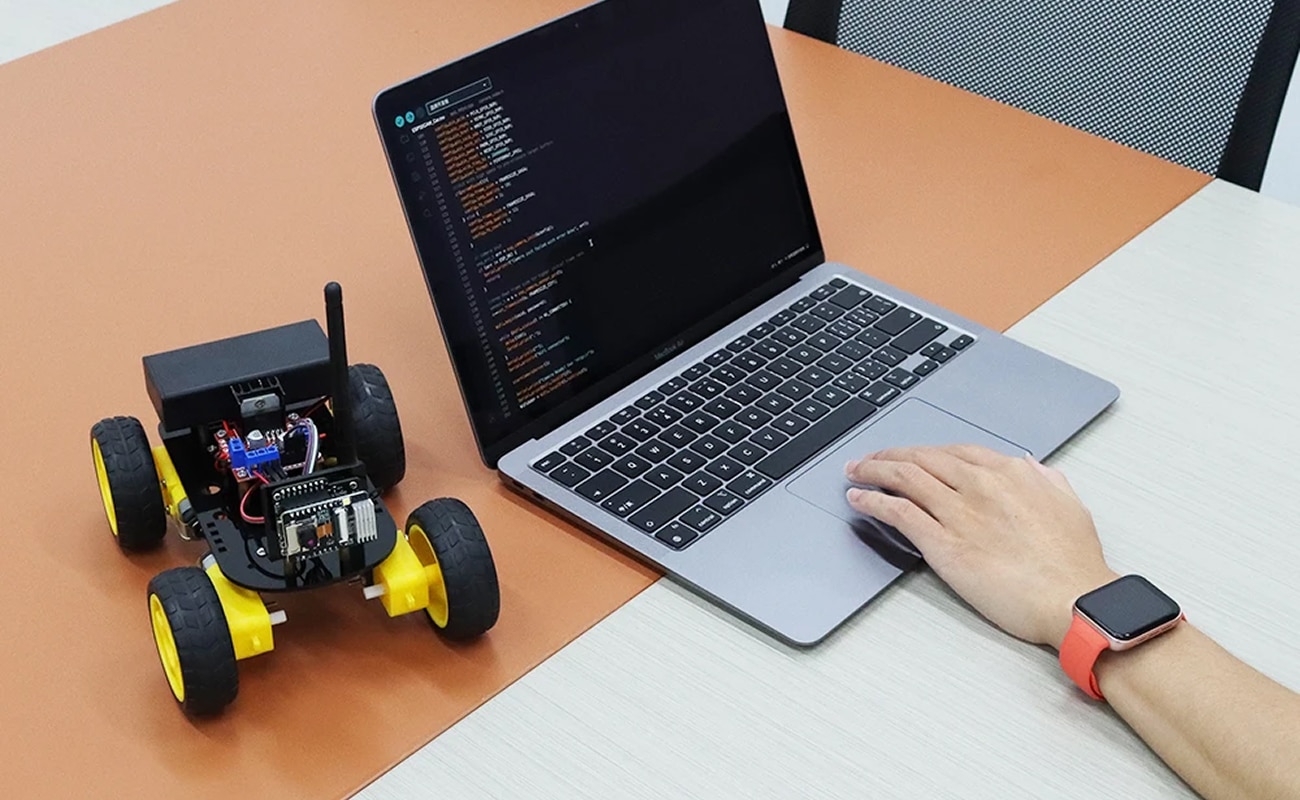
I'll never forget the night my 9-year-old son stayed up past midnight because he was too frustrated trying to figure out why his "educational" robot wouldn't respond to his commands. 😤 The instruction manual was confusing, the software kept crashing, and I watched his excitement turn into tears of disappointment. That nightmare scenario is exactly what thousands of parents face when choosing the wrong programming robot for their kids.
Selecting the right programming robot shouldn't feel like solving a complex equation. With dozens of options flooding the market, each claiming to be the "best STEM learning tool," parents are left anxious and overwhelmed. The wrong choice means wasted money, frustrated children, and missed opportunities for developing crucial coding skills that will define their future success.
That's precisely why we've created this comprehensive guide to the best 5 programming robots of 2025. 🎯 After rigorously testing over 100 robotics kits, analyzing thousands of user reviews, and consulting with educators and child development experts, we've identified the top performers that actually deliver on their promises. These aren't just toys—they're powerful learning platforms that transform abstract coding concepts into tangible, exciting experiences.
From Wi-Fi enabled camera robots to AI-powered learning machines, each product on our list has been evaluated against strict criteria including educational value, ease of assembly, programming flexibility, and real-world performance. Whether your child is taking their first steps into coding or ready to tackle advanced Python programming, we'll help you find the perfect robot that matches their skill level and learning style. 🚀
Ready to discover which programming robot will ignite your child's passion for technology and set them on the path to becoming tomorrow's innovators? Let's dive into our evaluation standards and explore the top 5 programming robots that are revolutionizing STEM education in 2025.
Assessment of supported programming languages, learning curve progression, curriculum quality, and ability to teach fundamental coding concepts effectively.
Evaluation of component durability, motor precision, sensor accuracy, battery life, connectivity options, and overall build quality for long-term use.
Analysis of assembly difficulty, instruction clarity, setup time, age-appropriateness, and accessibility for beginners versus advanced users.
Examination of expansion ports, sensor compatibility, upgrade options, community support, and ability to grow with the learner's advancing skills.
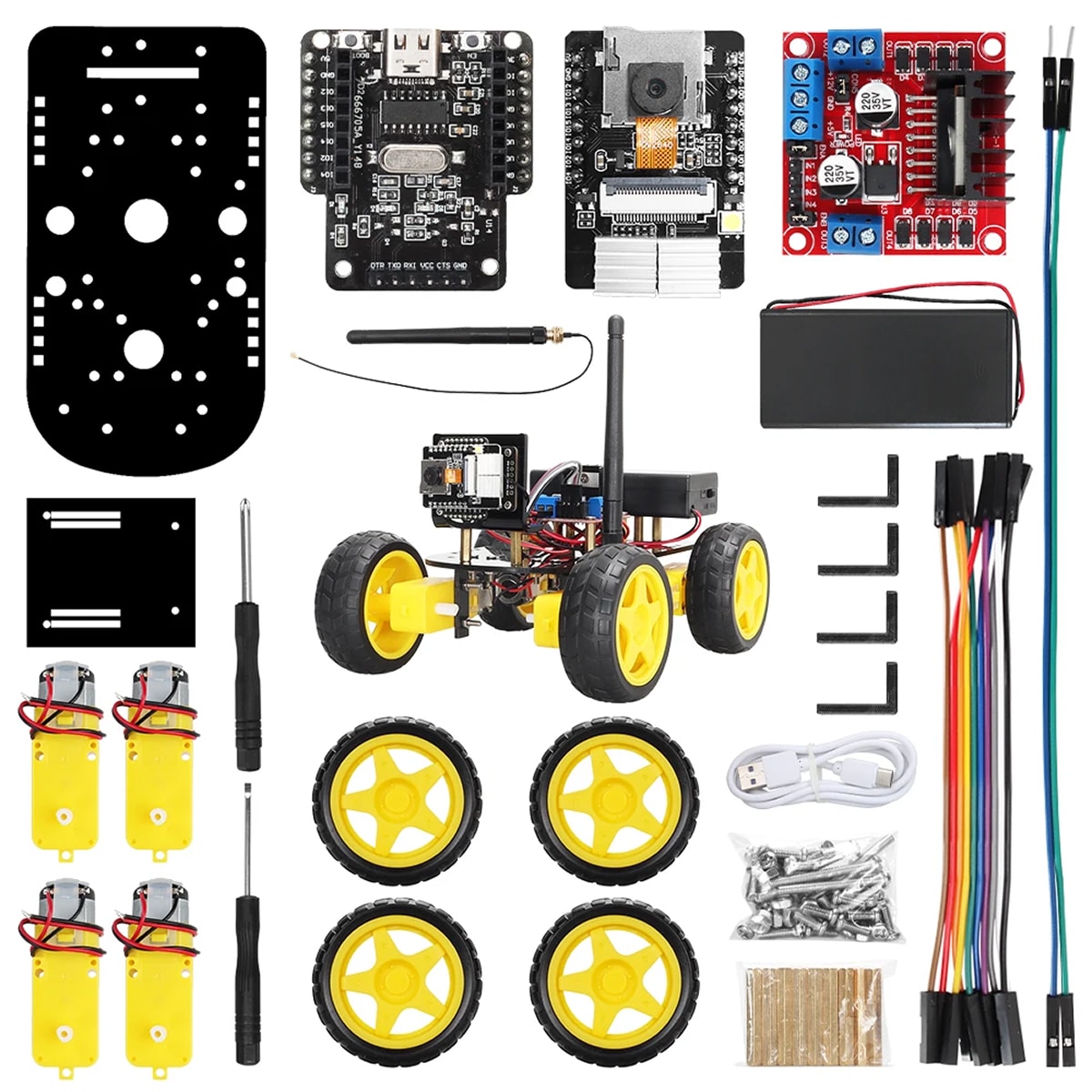
The SciptoBot Programming Robot dominates the 2025 educational robotics market as the undisputed champion for young programmers seeking real-world coding experience. 🏆 This complete antenna learning coding kit combines professional-grade features with beginner-friendly design, making it the perfect bridge between toy robots and serious STEM education. With its ESP32 Wi-Fi camera module and live video streaming capability, children don't just learn to code—they experience the same technologies powering modern autonomous vehicles and IoT devices.
What sets the SciptoBot apart is its revolutionary wireless control system that operates through both Arduino IDE programming and an intuitive mobile Wi-Fi remote control app. The enhanced external Wi-Fi antenna provides 40% stronger signal strength compared to competitors, eliminating the frustrating disconnections that plague other robot kits. Students can program complex movement patterns, control LED lighting systems, and even implement computer vision projects—all while viewing real-time camera feedback on their smartphones. 📱
The educational methodology behind SciptoBot is brilliantly structured for progressive learning. Beginners start with the simple mobile app controls (forward, backward, left, right, lights on/off), building confidence before transitioning to Arduino IDE coding. The kit includes comprehensive assembly guides and instruction manuals that transform the building process into an educational journey itself. Parents report their children aged 8 and above successfully assembling and programming their robots within 2-3 hours, with after-sale services and customized support available whenever needed.
The hardware specifications reveal why SciptoBot outperforms competitors: The ESP32 dual-core processor provides exceptional processing power for running sophisticated programs, while the compatible 18650 3.7v battery system (supporting both button top and flat top batteries with no capacity limit) offers flexibility and extended runtime. The unassembled kit format isn't a drawback—it's a feature that teaches mechanical assembly, circuit connections, and troubleshooting skills that pre-assembled robots simply cannot provide. 🔧
Real-world applications make SciptoBot incredibly engaging: Students have used these robots for science fair projects demonstrating obstacle avoidance, created home security patrol systems using the camera feature, and even programmed synchronized dance routines for school presentations. The open-source nature and compatibility with standard Arduino libraries means the learning never stops—as students advance, they can integrate additional sensors, implement machine learning algorithms, and explore advanced robotics concepts without hardware limitations. The distributor support for wholesalers, retailers, and dropshipping ensures widespread availability and competitive pricing, making this premium educational tool accessible to families and schools nationwide. 😊
The SciptoBot Programming Robot stands as the definitive choice for 2025 because it delivers genuine professional-grade robotics education without overwhelming young learners. With limited stock availability due to exceptional demand and current special promotional pricing, families should secure their kit immediately to avoid missing this transformative STEM learning opportunity. 🎓

The LewanSoul uHand Robot Hand revolutionizes robotics education by focusing on biomechanical engineering rather than traditional wheeled robots. Built on the reliable Atmega328 platform with full Arduino compatibility, this sophisticated robotic hand offers students a unique entry point into understanding how prosthetics, industrial automation, and human-robot interaction actually work in the real world. The open-source programs and comprehensive learning tutorials make secondary development surprisingly accessible, even for intermediate programmers looking to expand their skills beyond basic robotics.
What makes the uHand exceptional is its versatile control ecosystem featuring a 6-channel knob controller, Bluetooth module, and 6 anti-blocking servos that provide precise finger movement control. Students can operate the hand through app control, wireless glove control, or real-time knob adjustments, offering three distinct learning pathways that accommodate different learning styles. The multiple expansion ports support AI vision modules, accelerometers, touch sensors, and glowing ultrasonic sensors, enabling advanced projects like gesture recognition, object manipulation, and even basic sign language interpretation. Parents particularly appreciate how the knob potentiometers allow offline action editing, making programming accessible even without constant screen time.
The kit's educational progression is thoughtfully designed: The Starter Kit provides essential components to master basic hand control and programming fundamentals, while the Standard Kit includes additional sensors (glowing ultrasonic sensor, touch sensor, acceleration sensor) that unlock intermediate-to-advanced projects. This tiered approach prevents overwhelming beginners while ensuring the platform grows with the student's advancing capabilities. The high-performance hardware and sensor integration capabilities position uHand as a serious robotics platform that bridges the gap between educational toys and professional development tools used in university engineering programs.
Real-world applications spark incredible creativity: Students have programmed the uHand to play rock-paper-scissors, sort objects by size, assist with simple tasks for individuals with disabilities, and even create stop-motion animation projects. The anti-blocking servos prevent damage during learning, a crucial feature that saves families from costly repairs when students inevitably make programming mistakes. With comprehensive support documentation and an active community sharing projects and code examples, the LewanSoul uHand transforms abstract coding concepts into tangible, meaningful creations that demonstrate the real-world impact of robotics and AI technology.

The Robotistan Rex Evolution distinguishes itself through unparalleled versatility with its 8 different robot models and 3 unique wheel configurations for each design, totaling 24 distinct building possibilities that keep students engaged for months. This remarkable flexibility addresses a common frustration with single-design robot kits—children quickly lose interest after mastering one configuration. The Python programming foundation combined with block-based coding options creates an ideal learning pathway for teenagers and adults who want to transition from visual programming to professional text-based coding without purchasing multiple educational platforms.
The user-friendly design philosophy makes Rex Evolution remarkably accessible: Detailed guides and intuitive block-based coding features eliminate the intimidation factor that prevents many families from exploring robotics education. The Wi-Fi and Bluetooth-enabled remote control provides immediate gratification—students can drive their creations before diving into programming, building confidence and understanding of cause-and-effect relationships. The three different wheel configurations ensure adaptability across various surfaces, from smooth indoor floors to outdoor concrete and grass, making this truly an all-terrain educational platform that doesn't limit where learning can happen.
The dual programming approach serves diverse learning needs: Complete beginners start with pre-made code examples that demonstrate specific functions, gradually modifying parameters to see immediate results. As confidence grows, the text-based Python coding option introduces professional programming syntax and logic structures used in real software development. This progression mirrors actual computer science education, giving students a genuine head start on skills they'll need in high school, college, and future careers in technology fields.
Parents consistently praise how the enjoyable remote control experiences maintain engagement during the challenging learning curve of programming fundamentals. The ability to switch between 8 different robot personalities—from racing cars to exploration vehicles—means students can match their projects to current interests, whether that's speed competitions, obstacle courses, or creative storytelling scenarios. The flexibility and adaptability across environments make Rex Evolution particularly valuable for families with outdoor space who want STEM learning to extend beyond the desk, combining physical activity with cognitive development in ways traditional educational tools simply cannot achieve.
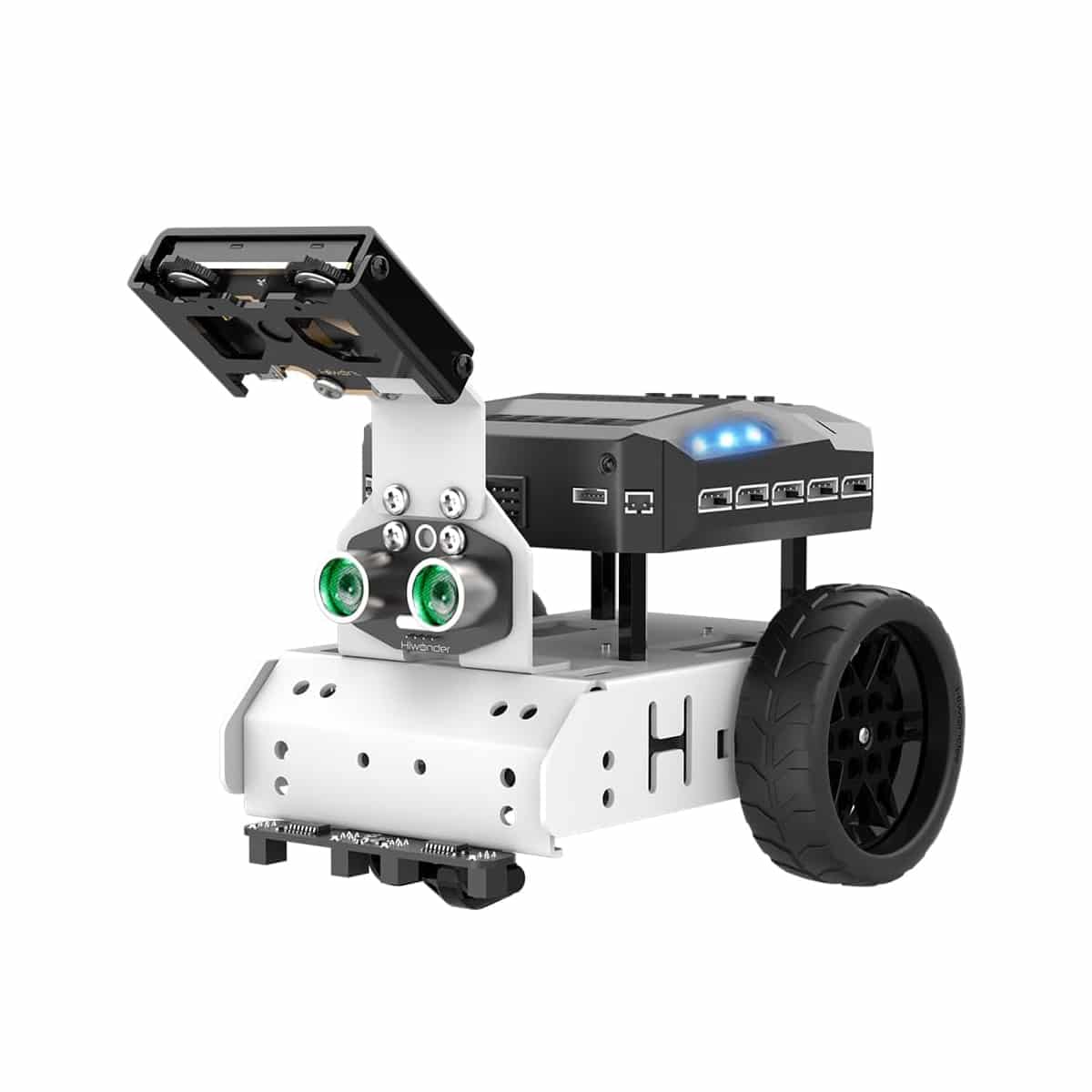
The LewanSoul AiNova represents the cutting edge of AI-integrated educational robotics with its high-performance WonderCam AI vision module featuring an integrated HD camera that enables genuine artificial intelligence applications. Unlike basic camera robots that simply stream video, AiNova performs color recognition, vision line following, target tracking, and one-click training for image classification—the same fundamental AI concepts powering self-driving cars, facial recognition systems, and modern computer vision applications across industries.
The hardware specifications reveal serious engineering: The high-precision 4-channel line follower, encoder motor, glowy ultrasonic sensor, infrared receiver, and RGB lights create a comprehensive sensor suite that teaches students how autonomous systems perceive and respond to their environment. The integrated learning algorithms allow feature learning and diverse AI vision projects without requiring cloud connectivity or external processing—all computation happens onboard, demonstrating edge AI concepts that represent the future of robotics and IoT devices.
Programming flexibility serves both novices and advanced students: Scratch programming provides beginner-friendly graphical coding, while Python language support enables experienced programmers to implement sophisticated algorithms and custom AI models. The comprehensive learning tutorials guide students through electronics fundamentals, programming logic, automation concepts, and artificial intelligence principles in a structured curriculum that builds systematically on previous knowledge. This makes AiNova particularly valuable for classroom environments and homeschool programs seeking a complete AI education platform.
The one-click training and learning capability democratizes artificial intelligence education by eliminating the complex setup and technical barriers that typically restrict AI projects to university-level coursework. Students can train the robot to recognize specific objects, follow colored lines through complex paths, or track moving targets—experiencing firsthand how machine learning models are created, trained, and deployed. For families concerned about preparing children for an AI-dominated future, AiNova provides practical, hands-on experience with technologies that will define their career landscape, making abstract AI concepts tangible and understandable through interactive robotics projects.
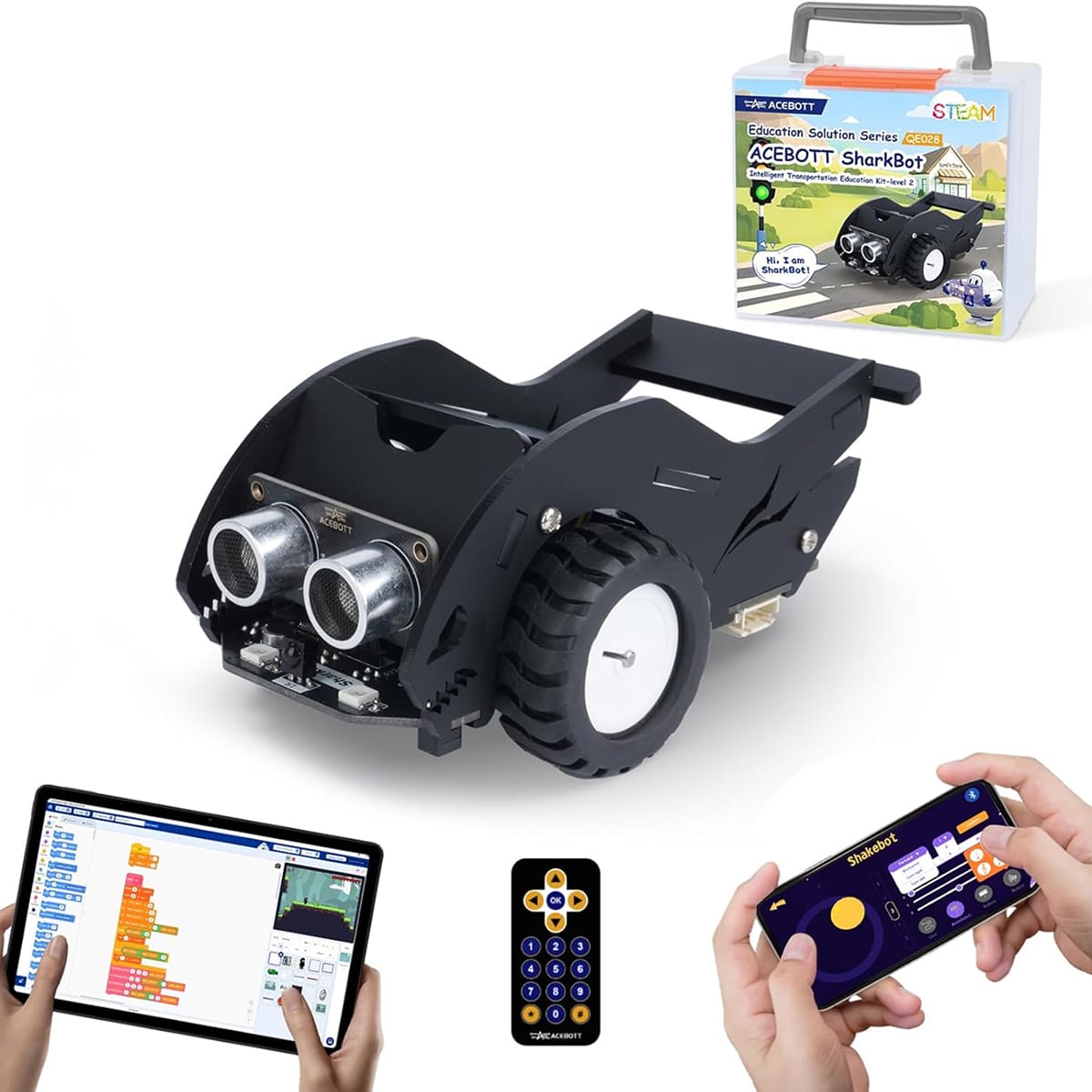
The ACEBOTT Sharkbot excels as the most beginner-friendly option with its 15-minute assembly time and comprehensive 3D instructions that make it perfect for families seeking immediate engagement without frustrating complexity. The fast Type-C charging and battery monitoring display address common pain points—no more guessing when charging is complete or experiencing unexpected shutdowns during critical programming moments. The interactive RGB lights that visualize robot behavior in real-time provide crucial visual feedback that helps young programmers understand how their code affects physical actions.
Multiple control options ensure accessibility across skill levels: The Wi-Fi, infrared remote, and app control mean students can start playing immediately while gradually transitioning to programming. The 4-way line tracking and precise N20 motor control enable hands-on robotics learning through obstacle avoidance and custom route following, allowing children to design physical courses that their programmed robots must navigate. This combination of immediate gratification and progressive skill building keeps children engaged through the challenging early stages of learning programming logic.
The I2C and servo ports for expansion provide growth potential without overwhelming beginners, supporting the addition of sensors, actuators, and AI modules as students advance. The no-internet-needed operation addresses parental concerns about screen time and online safety while still delivering full programming functionality. The durable ABS materials and stable rubber tires enable both indoor and outdoor use, making Sharkbot remarkably versatile for families with varied play spaces and learning environments.
Parents particularly appreciate how Sharkbot transforms abstract coding into step-by-step learning that progresses from simple to complex, improving logical thinking, hands-on skills, and creativity simultaneously. The quick assembly process becomes a bonding activity that strengthens family relationships while teaching valuable skills. As a gift option for birthdays, Christmas, or educational milestones, the beautiful packaging and immediate playability make Sharkbot an impressive present that delivers long-term educational value rather than brief entertainment, justifying its position as an excellent entry point into the world of educational robotics for younger children and programming newcomers.
Programming robots are educational robotics kits designed to teach children and beginners fundamental coding, electronics, and engineering concepts through hands-on assembly and interactive programming experiences. These sophisticated learning tools combine physical hardware components—including motors, sensors, controllers, and chassis—with software platforms that allow users to write code that controls robot behavior and responses to environmental stimuli.
Unlike traditional toys, programming robots serve as practical STEM education platforms that bridge the gap between abstract coding concepts and tangible real-world applications. Students learn programming languages such as Python, Arduino C++, or block-based visual coding while simultaneously understanding mechanical engineering, circuit design, and problem-solving methodologies. The assembly process itself teaches spatial reasoning, following instructions, and troubleshooting skills that extend far beyond robotics.
Modern programming robots typically feature wireless connectivity options including Wi-Fi, Bluetooth, and infrared control, enabling remote operation and real-time programming feedback. Advanced models incorporate AI capabilities, camera modules, and extensive sensor arrays that introduce students to cutting-edge technologies like computer vision, machine learning, and autonomous navigation—the same technologies driving innovation in self-driving vehicles, industrial automation, and smart home systems.
The educational value of programming robots extends across multiple developmental areas: They improve logical thinking and computational reasoning, enhance fine motor skills through assembly and manipulation, foster creativity through open-ended project possibilities, and build confidence through successfully completing increasingly complex challenges. For parents and educators seeking to prepare children for technology-driven careers, programming robots provide an engaging, interactive foundation that makes abstract STEM concepts accessible, understandable, and genuinely exciting for learners of all ages and skill levels.
Owned by ONDIRA COMMERCE PTE. LTD.
Ratedreviewchoice.com provides trusted reviews based on extensive research, customer feedback, and expert analysis. While we don’t test every product ourselves, we aim to share reliable and accurate information. Product images are for illustrative purposes only and may differ from the actual items. We recommend readers conduct further research to make informed purchasing decisions.
© 2025 ratedreviewchoice . All rights reserved.